Winter storm forecast before your flight? A calm plan
A winter storm in the forecast a few days before your flight can send a nervous flyer's mind racing. Here's what the forecast terms mean, who actually decides whether a plane goes, what you're owed if the airline cancels, and a calm, step-by-step plan for the days before.
In this article · 6 sections
Flying soon? Our 7-day program walks you through your trip one calm step a day, and you can try a lesson free first. See what's inside.
If you're in crisis in the US, call or text 988 any time (988 Suicide & Crisis Lifeline). In an emergency, call 911, or ask any airport or airline staff member for help. This page is general information, not medical advice.
When the forecast turns white
Your flight is in a few days, and now the weather app shows snow, ice or a winter storm. If you're already nervous about flying, that can tip the worry into overdrive: "Will it be safe? Should I cancel? What if I get stuck?"
Here's the short version. A storm in the forecast is mainly a question of delays and plans, not of whether your plane is safe. The safety decisions sit with professionals bound by strict rules. Your job is much smaller: stay informed, have a plan B, and look after your nerves.
Flying soon? Save the free Calm Flight Checklist to your phone so the steps are ready however the weather goes. Check your flight's status in plain English with My Flight, and keep Right Now open if a delay at the gate gets to you. Flying for the holidays? The free holiday flight calm plan builds a printable countdown around your date.
What the forecast words mean
The National Weather Service uses three levels for winter weather:1
- Watch (be prepared): conditions are favorable for a significant winter storm, such as heavy snow, sleet or ice.
- Advisory (be aware): snow, ice or sleet is expected but shouldn't be hazardous enough to meet warning criteria; expect possible travel difficulties.
- Warning (take action): a significant winter event is happening or expected, and travel may become difficult or impossible in some situations.
Local offices set the thresholds for their own area, so the snow that triggers a warning in the Northern Plains is typically much more than in the Southeast.1 Those warnings are mostly about roads. For your flight, the useful takeaway is simple: a warning at either airport means delays are likely, so plan your drive to the airport and your timing around it.
Who decides whether your plane goes
Not you, and that's a good thing. US airline rules say no flight may be dispatched, continue en route or land when, in the opinion of the pilot in command or the airline's dispatcher, icing conditions are expected or met that might adversely affect safety.2 The same rule says no one may take off with frost, ice or snow stuck to the wings, control surfaces, engine inlets or other critical surfaces, and when snow or ice could stick, the airline must follow an FAA-approved de-icing program.2
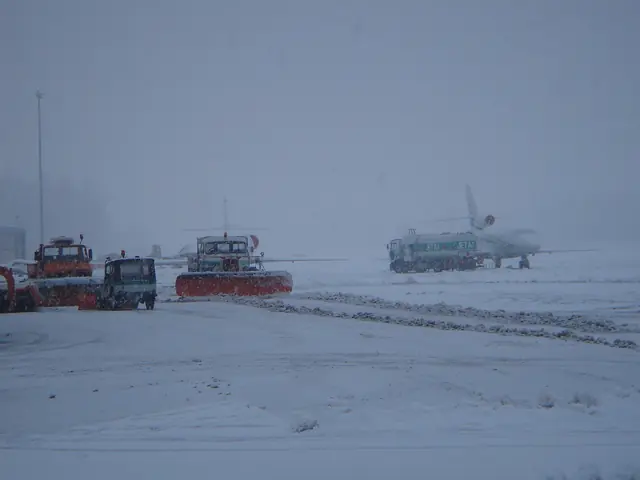
So if your flight goes, it's because trained people decided it could, under those rules. If it's delayed or canceled, that's the same rules working. For what happens on a snowy day, read is it safe to fly in snow? and why they spray your plane in winter.
Your rights if the airline cancels
This part is worth knowing ahead of time, because it takes a lot of the "what if" out of the storm. The U.S. Department of Transportation says you're entitled to a refund if the airline cancels your flight, regardless of the reason, and you choose not to travel or not to accept travel credits, vouchers or other compensation.4 The same applies if the airline significantly delays or changes your flight.4 Refunds are due within 7 business days for credit card purchases.4
One important difference: if you cancel a nonrefundable ticket because you're worried about the forecast, those rules don't apply. Check your airline's website or app for any travel alert covering your airports before deciding. There's a full walkthrough in canceled holiday flight: what to do and our flight cancelled help page.
A calm plan for storm week
- Check once or twice a day, not every ten minutes. Look at your airline's app and, on the day, the FAA's National Airspace System Status page, which shows delays and ground stops at major airports.3 Constant refreshing feeds the worry without telling you anything new.
- Focus on what you can control. The NHS suggests not focusing on the things you can't change and putting your energy into what helps you feel better.5 You can't control the snow. You can control your bag, your phone charger, your snacks and your backup plan.
- Make a plan B. Note the airline's phone number and app, a later flight you'd be happy with, and where you'd stay if you're stuck overnight. Having it written down calms the "what ifs."
- Leave extra time for the roads. The weather warnings are about driving. Give yourself a buffer to get to the airport.
- Practise one breathing exercise. The NHS version: breathe in gently through your nose and out through your mouth, counting steadily from 1 to 5 each way if that helps, for at least 5 minutes.6 Use it while you wait out delays.
- Expect de-icing and a slower day. If the plane gets sprayed, it's the rules at work. If you're held at the gate, that's the system keeping planes on the ground instead of circling. See why holiday flights get delayed.
If a delay drags on, stuck on the tarmac during a holiday delay and Travel help cover your options, and how to calm down on a plane has tools for the moment.
If you'd like a structured way to prepare, the 7-day program walks through your flight one short day at a time, ending with a rehearsal of your real trip. Days 1–2 are free.
The calm takeaway: a winter storm in the forecast mostly means delays, not danger. The rules keep iced-up planes on the ground and put the go/no-go decision with the pilot and dispatcher, and if the airline cancels, you're owed a refund if you don't want the alternative. Check in once or twice a day, make a plan B and save the free Calm Flight Checklist.
Keep reading
- Scared to fly at Christmas? A calm plan for winter flights
- Scared of landing? What to expect, minute by minute
- Is it safe to fly in snow?
- Why they spray your plane in winter (de-icing, explained)
- Why is turbulence worse in winter?
Quick answers
Will my flight be canceled if a winter storm is forecast?
Not necessarily. Many flights still operate in snow once planes are de-iced and runways are cleared, though delays are common. Your airline's app and the FAA's National Airspace System Status page are the best places to watch.
Is it dangerous to fly when a winter storm warning is out?
The decision isn't yours to make. US rules say no airline flight may be dispatched, continue or land when the pilot in command or dispatcher thinks icing that might affect safety is expected, and no plane may take off with frost, ice or snow stuck to its wings.
Do I get a refund if my flight is canceled because of snow?
If the airline cancels, yes, whatever the reason. DOT says you're entitled to a refund if you choose not to travel or not to accept a credit, voucher or other compensation. Canceling a nonrefundable ticket yourself is different.
What's the difference between a winter storm watch and a warning?
The National Weather Service issues a watch when conditions are favorable for a significant winter storm, so be prepared. A warning means a significant event is happening or expected and travel may become difficult or impossible.
Sources
(6)
- National Weather Service, Winter Weather Warnings, Watches and Advisories
- 14 CFR § 121.629, Operation in icing conditions
- FAA, National Airspace System Status
- U.S. DOT, Refunds
- NHS, Anxiety, fear and panic
- NHS, Breathing exercises for stress
Facts last checked against these sources: November 15, 2026.