Connecting flights over the holidays: a calm guide
A connection can feel like the scariest part of a holiday trip, especially on a first flight or with kids or older parents in tow. Here's how changing planes actually works, what happens to your bags, what to do if a delay makes you miss the next flight, and how to plan a calmer layover.
In this article · 8 sections
Flying soon? Our 7-day program walks you through your trip one calm step a day, and you can try a lesson free first. See what's inside.
The short answer
A connection sounds complicated, but most of the time it's simple: you get off one plane, check the screen for your next gate, and walk there. On a single ticket, your bags usually travel through to your final airport, and if a delay makes you miss the next flight, the airline normally rebooks you.
A little planning makes it much calmer, especially over the holidays when airports are busy. This year Thanksgiving is Thursday, November 26, so the days around it are a good time to give yourself extra breathing room.
Heart racing at the thought of a tight connection? The anxious-right-now page has quick help, one step at a time.
What actually happens when you change planes
- Before landing, the crew often announces connecting gates. Don't worry if you miss it.
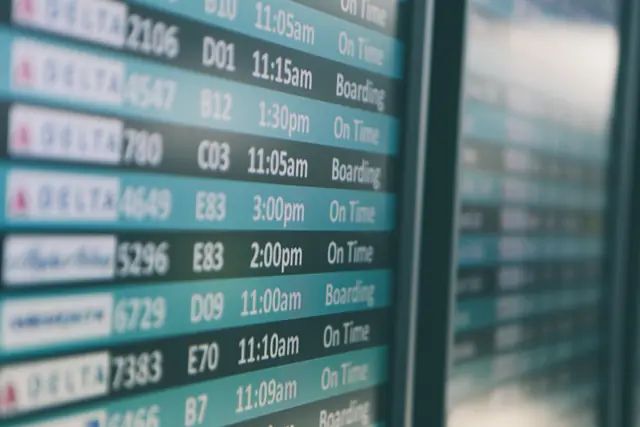
- When you get off, look for the departure screens near the gate area. Find your next flight number and its gate. Your airline's app usually shows it too.
- Walk or take the airport train to the new gate. On a domestic connection where you stay inside the secure area, you usually don't go through security again.
- Check in with the gate agent if anything looks wrong, like a gate change or delay.
That's it. If you're nervous about finding your way, our airport guides link to official terminal maps, so you can look at the layout before you go.
What happens to your bags
Domestic trips on one ticket: checked bags are usually tagged through to your final airport. It's worth asking at check-in, "Is my bag checked all the way through?" Then you can relax.
Arriving from another country: US Customs and Border Protection says arrival processing happens at your first US airport. You complete it, pick up your bags, and recheck them for your connecting flight. Then you go through a TSA checkpoint before your next gate.4 The Port of Seattle says this processing can take 60 minutes or longer at busy times such as the holidays, and recommends at least 120 to 180 minutes between flights for international connections at its airport.5 Other airports differ, so check yours.
Two separate tickets: if you booked each flight on its own, you may need to collect your bag and check it in again, and the second airline may not wait for you. Leave more time, and contact the second airline as soon as you know you'll be late.
If a delay makes you miss your connection
This is the worry most people have, so here's the plan.
- On one ticket, it's the airline's job to sort out. It will normally rebook you on the next available flight. Often the app does it before you've even landed.
- Check the app first, then go to a transfer or service desk. You can also call while you wait in line. The airline contact directory has official links.
- Ask what they can offer if you're stuck for hours, such as meal vouchers or a hotel. Our delayed flight guide and missed flight guide explain the options.
What US rules say about big changes. Federal rules define a "significantly delayed or changed flight" to include arriving 3 or more hours later on a domestic trip (6 or more internationally), departing from or arriving at a different airport, or being put on an itinerary with more connections than the original.1 If that happens and you choose not to fly on the changed flight or accept rebooking, the airline must give you a full refund, including taxes and fees, on flights to, from or within the US.2 If the flight is cancelled outright, our flight cancelled guide walks through it.
Help getting between gates
If you, a parent or a grandparent will find a long walk hard, ask for help. US rules say airlines must provide help between gates for a connection when a passenger with a disability asks for it. The airline that operated your first flight is responsible, even if your next flight is on a separate ticket.3 Request it when you book, and again at check-in. Our wheelchair assistance guide explains how it works.
Choosing a calmer connection
When you're booking, a few things help:
- Nonstop if you can. One flight means one boarding and one landing.
- Look at the layover time, not only the price. A slightly longer layover can feel much calmer, especially with kids or older parents, and gives time for a snack and a restroom.
- Earlier flights in the day leave more later options if something slips.
- Keep everything on one ticket when possible, so the airline handles any rebooking.
If you're traveling with little ones, our flying with kids page has tips for the walk between gates.
For an overnight stop with a young child, The Travel Mommy's overnight layover with a toddler guide walks through the airport-hotel decision, packing for one night and preparing for an early departure. (We swapped links with The Travel Mommy; no payment was involved.)
Your layover, minute by minute
- Plan the day in My Flight, so you can see each step, from leaving home to your final landing.
- Screenshot your boarding passes in case the app is slow.
- Find your gate first, then relax. Once you know where you're going, grab food, refill water and stretch.
- Keep an eye on the screen for gate changes, and listen for announcements.
- If nerves build on the second flight, that's normal. Takeoff number two often feels easier, because you've just done it once.
The calm takeaway: most connections are a walk to a new gate. Ask whether your bags go through, keep your flights on one ticket, and know that a missed connection on one ticket is the airline's job to fix. If flying itself is the hard part, the 7-day program helps, one small step a day.
Keep reading
- Flying with older parents for the holidays
- What is a ground stop?
- Is TSA PreCheck worth it for holiday travel?
Quick answers
Do I have to get my bags during a layover?
On a domestic trip booked on one ticket, checked bags are usually sent through to your final airport, but ask at check-in to be sure. Arriving from abroad, CBP says you clear customs at your first US airport, then recheck your bags for the connecting flight.
What happens if I miss my connecting flight because of a delay?
If both flights are on one ticket, the airline will normally rebook you on a later flight. Check the app or go to a transfer desk. If the new plan arrives 3 or more hours later on a domestic trip and you decide not to go, US rules say you can get a refund.
Do I have to go through security again on a layover?
Usually not on a domestic connection where you stay inside the secure area. If you leave it, or arrive on an international flight, you'll go through TSA screening again before your next gate.
Can I get help getting to my connecting gate?
Yes. US rules say airlines must help a passenger with a disability who asks get between gates for a connection, at no cost. The airline that flew your first flight is responsible, even on separate tickets.
Sources
(5)
- 14 CFR § 260.2, Definitions (significantly delayed or changed flight)
- 14 CFR § 260.6, Refunds for cancelled or significantly changed flights
- 14 CFR § 382.91, Assistance moving within the terminal
- U.S. Customs and Border Protection, Welcome to the United States (connecting flights)
- Port of Seattle, International connections at SEA
Facts last checked against these sources: November 5, 2026.