How do pilots handle thunderstorms?
Pilots steer well clear of thunderstorms, using onboard radar, forecasts and reports from other flights, and air traffic control helps them reroute. That's why storms can mean delays, holding or a longer route, and why you might feel a few bumps on the way round.
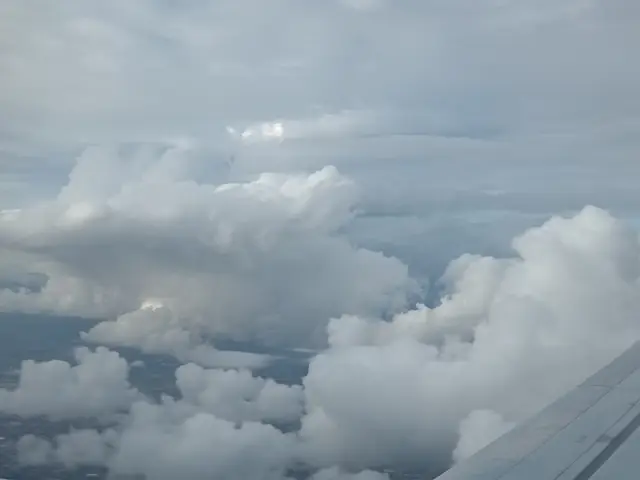
In this article · 6 sections
The basic policy: go around them
The FAA's guidance to pilots is direct: "Avoiding thunderstorms is the best policy."1 Pilots are told never to regard any thunderstorm lightly, and not to take off or land in the face of an approaching thunderstorm.1
That's why airliners steer around storms rather than through them.
How far they stay away
The FAA's Aviation Weather Handbook gives pilots specific distances:2
- At least 20 miles from any thunderstorm identified as severe or giving an intense, heavy or extreme radar echo.
- At least 40 miles between two such storms before flying between them.
- Go around the whole area if more than half of it is covered by thunderstorms.
- Wait it out on the ground if there's no way around.
The handbook explains why: hazardous turbulence can extend as much as 20 miles from the edge of a storm's radar echo.2 Those wide margins are the reason a flight might make a long detour around weather you can't even see from your window.
How pilots spot them
- Weather radar in the nose of the airplane. The handbook stresses it's for avoiding severe weather, not for flying into it.2
- Forecasts and weather data before and during the flight.
- Other pilots. The handbook tells pilots to listen to the radio for reports from aircraft ahead and for other flights asking to deviate.2
Air traffic control helps
Controllers share weather information and help pilots avoid weather areas when asked, and pilots can request a different route.1 When lots of flights need to avoid the same storms, airspace gets crowded, which is the main reason storms cause delays, holding and longer routes. Annoying, yes. But each of those is a sign of caution. See what a ground stop is and why planes circle before landing.
What you'll feel
- Bumps near storm areas. The FAA guidance notes turbulence should be expected near storms, even in clear air.1 Keep your seat belt fastened whenever you're seated.3
- Turns you didn't expect. Gentle banks to fly around weather are normal.
- A wait on the ground. Airports may pause departures or arrivals while a storm passes overhead, in line with the guidance not to take off or land as one approaches.1
Lightning? Airliners are built to handle it. See our lightning explainer.
The calm takeaway: the whole system is designed to keep airplanes miles away from storms. Delays and detours are how it does that.
Keep reading
- Is it safe to fly in the rain?
- How do pilots know where turbulence is?
- Why was my flight delayed for "weather" when it's sunny?
- Check the weather at both ends of your trip in plain English with My Flight. For a calm week before you go, see 7 days to your flight or the free newsletter.
Quick answers
Do planes fly through thunderstorms?
No. FAA guidance says avoiding thunderstorms is the best policy, and advises staying at least 20 miles away from any storm identified as severe or giving an intense radar echo.
How do pilots see thunderstorms?
With weather radar in the nose of the airplane, forecasts and weather data, and reports from other aircraft and air traffic control. If storms block the way, pilots ask controllers for a route around them.
Why is my flight delayed because of thunderstorms?
FAA guidance tells pilots not to take off or land in the face of an approaching storm, and when many flights need to route around the same storms, airspace gets crowded. Delays and holding are how the system keeps everyone clear.
What happens if a plane gets hit by lightning?
Airliners are designed and tested to handle lightning strikes. Passengers may see a flash or hear a bang, and the airplane is inspected after landing.
Sources
(3)
- FAA Aeronautical Information Manual, 7-1 (Thunderstorm flying; weather avoidance)
- FAA Aviation Weather Handbook (FAA-H-8083-28B), Chapter 22 Thunderstorms (22.8 Thunderstorm Avoidance)
- FAA, "Turbulence: Staying Safe"
Facts last checked against these sources: October 19, 2026.