Is it normal for airplane wings to flex and bounce?
Yes. Wings are designed to bend. The rules require them to carry far more than the biggest loads expected in service, and bending within those loads is allowed as long as it never affects safe flight.
In this article · 5 sections
Flexing is the design working
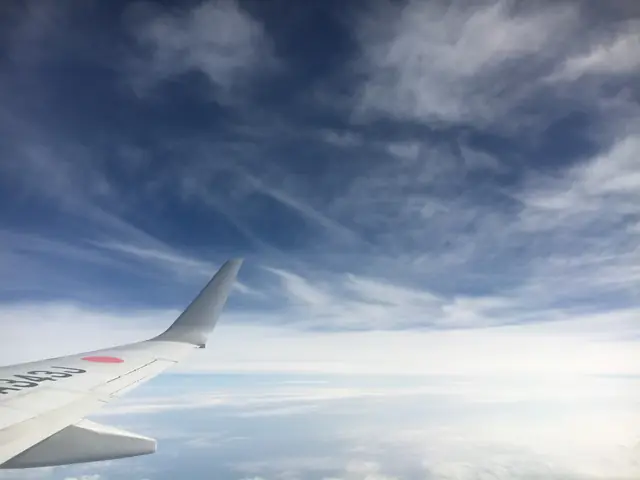
If you have a window seat over the wing, you may see the tip rise and fall in bumpy air, sometimes by what looks like a lot. That movement is normal. A wing is a long beam that is meant to bend, the way a fishing rod or a tall building is designed to sway rather than stay rigid.
What the rules require
US certification rules for airliners describe two levels of load.
- Limit loads are the largest loads the airplane is expected to see in service. The structure has to carry them without detrimental permanent deformation, and at any load up to that point any bending may not interfere with safe operation.1
- Ultimate loads are limit loads multiplied by a factor of safety of 1.5.2 The structure has to carry those without failing for at least three seconds. When this is proven by a static test, the test has to include the real bending the structure goes through on the way.1
For a sense of scale, the minimum maneuvering load an airliner must be designed for is at least 2.5 times its weight in a pull-up, before the 1.5 factor is applied.3
So the bending you see is accounted for in the rules. The wing is expected to move.
Why wings rise in flight
On the ground, a wing holds up only itself, its fuel and the engine hanging under it. Once you're flying, the wings hold up the entire airplane, including you, so they curve upward. In turbulence the load goes up and down a little, and so does the tip.
The thing that actually matters in turbulence
The FAA's advice to passengers about turbulence isn't about the wings at all. It's about people: the injuries happen to passengers who aren't wearing their seat belts and get thrown from their seats.4 Keep it fastened when you're seated and let the wing do its job.
Keep reading
- Can turbulence make a plane crash?
- Why do the wings bend and flex? (quick answer)
- Turbulence: uncomfortable, but not dangerous to the airplane
- See forecast bumps for your route with My Flight
Quick answers
Why do airplane wings bend in turbulence?
Because they're built to. A wing that flexes soaks up bumps, a bit like a car's suspension. Certification rules allow bending up to the largest expected loads, provided it never interferes with safe operation.
Can a wing snap off in turbulence?
Airliner structures must carry their largest expected loads without harmful permanent bending, and then 1.5 times those loads without failing for at least 3 seconds in testing. The FAA's turbulence advice for passengers is about seat belts, because the people inside are what need protecting.
Why do the wingtips rise during flight?
On the ground the wings carry only their own weight and the engines. In flight they hold up the whole airplane, so they bend upward. How much depends on the design.
How much force are airliner wings designed for?
US rules set a minimum design load of 2.5 times the airplane's weight in a pull-up, then require the structure to carry 1.5 times that without failing.
Sources
(4)
- 14 CFR § 25.305, Strength and deformation
- 14 CFR § 25.303, Factor of safety
- 14 CFR § 25.337, Limit maneuvering load factors
- FAA, "Turbulence: Staying Safe"
Facts last checked against these sources: October 18, 2026.