Choosing a seat when you're a nervous flyer
There's no "safe seat" ranking, and we won't invent one. But some seats can feel calmer, and a few seat rules are worth knowing. Here's what the sources say.
In this article · 6 sections
We won't rank seats by safety
You may have seen headlines claiming the back or the middle of the plane is "safest". We don't publish seat safety rankings or odds, because no seat number can predict anything about a particular flight. What we can do is help you pick a seat that feels calmer, and tell you the one habit the FAA says actually protects you.
The habit that matters in every seat
The FAA advises keeping your seat belt buckled at all times when you're seated.1 Turbulence can be unexpected, and unbuckled passengers can be thrown from their seats.1 That advice is the same in row 1 and row 40.
Seats that can feel calmer
Near the wings. An airplane pitches (nose up and down) and rolls around imaginary axes that pass through its center of gravity,3 which on an airliner is close to the wings. In simple physics terms, seats near that point swing through less of the pitching motion than seats at the very front or back. It's a comfort difference, not a safety one.
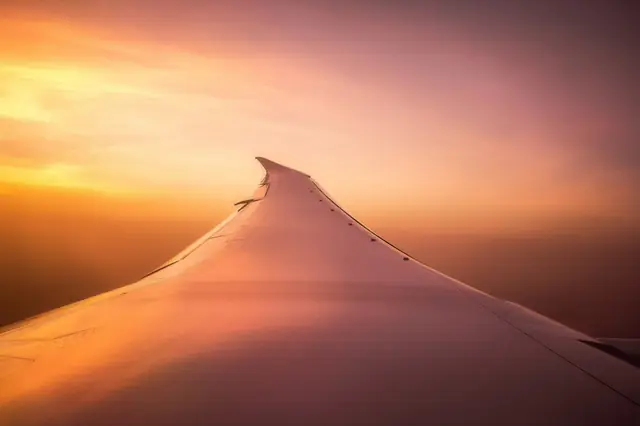
Window. Seeing the horizon and the wing helps some people feel more oriented, and you get a wall to lean on. (Wings flexing in turbulence is by design.)
Aisle. If feeling trapped is part of your anxiety, an aisle seat makes it easier to stand, stretch, or walk to the bathroom when the seat belt sign is off.
Near the front. You usually get off sooner after landing, which helps if the last part of the trip is the hardest for you.
There's no right answer. Pick the one that matches what your worry is about.
About exit rows
The extra legroom is tempting, but US rules say an exit-row passenger must be able and willing to help open the exit and assist others in an emergency, and must be at least 15.2 If you'd rather not take on that role, you can ask to be moved, and the airline can't require you to say why.2 If that responsibility would add to your worry, an ordinary seat is the better choice.
Once you're in your seat
- Buckle up, and keep it on.1
- Try the NHS breathing exercise: in gently through your nose and out through your mouth, counting 1 to 5 each way, for at least 5 minutes.4 Our breathing timer paces it for you.
- Open the in-flight pack, which works in airplane mode.
Keep reading
- Your seat, explained: seat belts, kids and exit rows
- Why do planes suddenly drop? "Air pockets", explained
Quick answers
What is the best seat for a nervous flyer?
It depends on what helps you. Some people prefer a window to see outside, some an aisle to stand up easily, and some a seat near the wings, which sit close to the point the airplane pitches around. We don't rank seats by safety.
Where do you feel turbulence the least?
In simple physics terms, an airplane rotates around its center of gravity, which is near the wings, so seats there swing through less pitching motion than seats at the far front or back. It's a comfort difference, not a safety one.
Should a nervous flyer sit in the exit row?
Only if you're willing and able to help open the exit in an emergency. US rules require airlines to check this, and you can ask to move to a different seat without giving a reason.
Is any seat safer than another?
We don't rank seats by safety. The FAA's advice that does make a difference is to keep your seat belt fastened whenever you're seated.