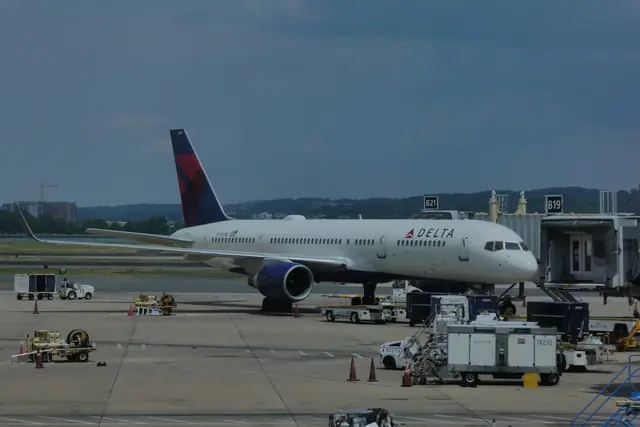
Timeline
- Built (Boeing 757-232)Serial number 30485
- Airworthiness certificate issuedClass: Standard
- Current registration certificate issuedOwner type: Corporation
- NTSB incident record OPS07IA006ADamage: Not recorded · Highest injury: None
- NTSB incident record ENG11IA035Damage: Not recorded · Highest injury: Minor
- NTSB incident record DCA23WA044Damage: Minor · Highest injury: None
- Latest FAA registry actionMost recent change recorded in the FAA registry
- Registration expiresValid
From FAA registry and NTSB records. Registration dates reflect paperwork, not flights.
The aircraft
- Make & model
- Boeing 757-232
- Category
- Fixed-wing airplane, multi-engine
- Year built
- 2000
- Engine type
- Turbofan (jet) · 2 engines
- Engine model
- P & W PW2037 (37,530 lb thrust)
- Max takeoff weight class
- 20,000 lb and over
- Serial number
- 30485
Registration
- Status
- Valid
- Expires
- May 31, 2029
- Certificate issued
- Dec 21, 2000
- Airworthiness class
- Standard
- Owner type
- Corporation
- Registered owner
- DELTA AIR LINES INC
The registered owner is often a bank, leasing company or trust, not necessarily the airline or person who flies it.
What kind of aircraft is this?
The Boeing 757 is a twin-engine, single-aisle jet airliner built from the early 1980s to 2004, often used on longer domestic and transatlantic routes and as a freighter.
In plain terms, it's a jet (turbofan) multi-engine airplane. Certification: Type certificated (factory design approved by the FAA).
There are 63 aircraft of this exact model variant on the US register, and about 440 Boeing aircraft with closely related model designations, out of 317,717 registered aircraft in total.
An aircraft's age on its own says little about how safe it is: airliners are maintained on strict, regulator-approved schedules, and inspections become more detailed as aircraft get older. More about the Boeing 757 →
NTSB accident & incident history for N6714Q
3 records found. An "incident" is a less serious event; an "accident" involves serious injury or substantial damage, as defined by the NTSB. Many records involve no injuries at all.
-
Nov 2, 2022Incident · Liberia, CRNTSB #DCA23WA044Aircraft in report: BOEING 757-232Damage: MinorHighest injury: None
-
Jun 21, 2011 (04:07 UTC)Incident · Atlanta, GANTSB #ENG11IA035Aircraft in report: BOEING 757-232Damage: Not recordedHighest injury: Minor
NTSB probable cause: Fuel leaking from the fuel flow transmitter that ignited on contact with the engine’s hot cases which resulted in an engine undercowl fire. The fuel leak resulted from the fuel flow transmitter end housing backing off from the main housing, creating a gap that allowed high pressure fuel to escape. Under certain assembly variances and operational load and temperature variations, the end housing joint may not be able to maintain the preload without eventually yielding, which results in the loosening of the joint and the resultant gap.
-
Jul 11, 2007 (18:37 UTC)Incident · Fort Lauderdale, FLNTSB #OPS07IA006AAircraft in report: Boeing 757-232Damage: Not recordedHighest injury: None
NTSB probable cause: The probable cause of this incident was the United 1544 flight crew's inadvertent entry onto the active runway.
Look up full reports by NTSB number in CAROL, the NTSB's public database.
Data: FAA Releasable Aircraft Database (file dated 2026-10-16) and NTSB aviation accident database; refreshed 2026-10-17 20:47 UTC. SafelyAboard shows public records only and does not rate or score aircraft, airlines or operators.