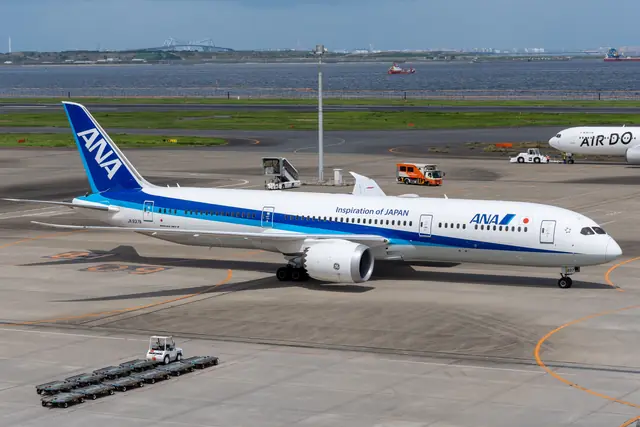
Timeline
- Built (Boeing 787-9)Serial number 40939
- Airworthiness certificate issuedClass: Standard
- Current registration certificate issuedOwner type: Corporation
- Latest FAA registry actionMost recent change recorded in the FAA registry
- NTSB incident record DCA26LA184Damage: Not recorded · Highest injury: None
- Registration expiresValid
From FAA registry and NTSB records. Registration dates reflect paperwork, not flights.
The aircraft
- Make & model
- Boeing 787-9
- Category
- Fixed-wing airplane, multi-engine
- Year built
- 2018
- Engine type
- Turbofan (jet) · 2 engines
- Engine model
- GE GENX SERIES (56,300 lb thrust)
- Max takeoff weight class
- 20,000 lb and over
- Serial number
- 40939
Registration
- Status
- Valid
- Expires
- Jan 31, 2028
- Certificate issued
- Jan 17, 2018
- Airworthiness class
- Standard
- Owner type
- Corporation
- Registered owner
- UNITED AIRLINES INC
The registered owner is often a bank, leasing company or trust, not necessarily the airline or person who flies it.
What kind of aircraft is this?
The Boeing 787 Dreamliner is a twin-engine, twin-aisle long-haul jet with a largely carbon-composite structure, in service since 2011.
In plain terms, it's a jet (turbofan) multi-engine airplane. Certification: Type certificated (factory design approved by the FAA).
There are 118 aircraft of this exact model variant on the US register, and about 214 Boeing aircraft with closely related model designations, out of 317,717 registered aircraft in total. That's a well-established type that mechanics, pilots and regulators know very well.
An aircraft's age on its own says little about how safe it is: airliners are maintained on strict, regulator-approved schedules, and inspections become more detailed as aircraft get older. More about the Boeing 787 Dreamliner →
NTSB accident & incident history for N24972
1 record found. An "incident" is a less serious event; an "accident" involves serious injury or substantial damage, as defined by the NTSB. Many records involve no injuries at all.
-
Mar 2, 2026 (19:00 UTC)Incident · Los Angeles, CANTSB #DCA26LA184Aircraft in report: BOEING 787-9Damage: Not recordedHighest injury: None
NTSB summary
On March 2, 2026, at 1100 Pacific Standard Time, United Airlines flight 2127, a Boeing 787-9, registration N24972, powered by two General Electric GEnx™-1B76A/P2 turbofan engines, experienced a No. 1 (left) engine surge during climb from Los Angeles International Airport (LAX), Los Angeles, California. There were no injuries to the 2 flight crew, 9 cabin crew, or 239 passengers on board. United Airlines operated the airplane as a Title 14 Code of Federal Regulations Part 121 domestic passenger flight destined for Newark Liberty International Airport (EWR), Newark, New Jersey. According to the flight crew statements, the flight began with an uneventful pre-flight, taxi, and takeoff from runway 25R. The First Officer was the pilot flying and the Captain was the pilot monitoring. While climbing through 17,000 feet, they experienced strong vibrations in the controls and observed decreasing left engine N2 speed. A compressor stall and a L ENGINE FIRE message was displayed on the engine indicating and crew alerting system (EICAS) shortly after. The First Officer transferred controls to the Captain and began executing the engine fire checklist. One fire bottle was discharged and the …
Look up full reports by NTSB number in CAROL, the NTSB's public database.
Data: FAA Releasable Aircraft Database (file dated 2026-10-16) and NTSB aviation accident database; refreshed 2026-10-17 20:47 UTC. SafelyAboard shows public records only and does not rate or score aircraft, airlines or operators.